
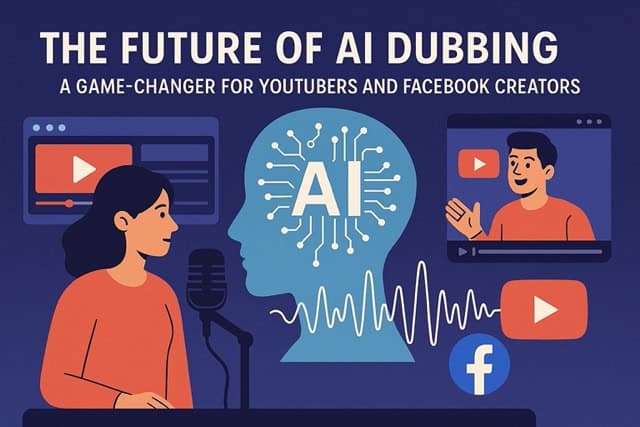
The digital age has unlocked incredible opportunities for content creators worldwide. Platforms like YouTube and Facebook have made it possible for anyone with a creative vision to share their ideas, stories, and expertise with global audiences. Yet, the challenge of reaching a truly diverse audience remains a significant one. Language barriers continue to limit the accessibility of many content creators’ work, effectively cutting them off from millions—even billions—of potential viewers.
Enter AI dubbing, a groundbreaking technology poised to revolutionize how creators connect with global audiences. By automating the complex process of translating and voicing content in multiple languages, AI dubbing is leveling the playing field, allowing creators to expand their reach and engagement like never before. For YouTubers and Facebook creators, this is more than a technological upgrade—it’s a fundamental game-changer that could redefine the content creation landscape.
Breaking Down AI Dubbing
AI dubbing uses artificial intelligence and machine learning to translate spoken content into other languages, then creates realistic voiceovers. Unlike traditional dubbing, which involves hiring voice actors and recording in expensive studios, AI dubbing streamlines the process entirely. This technology can replicate nuances of voice tone, pitch, and even emotional expression, making the result far more natural and engaging.
At the heart of this innovation are advanced text-to-speech (TTS) systems, machine translation algorithms, and neural networks trained on vast linguistic data. Together, these technologies allow for near-instantaneous content adaptation, making dubbed content available faster and at a fraction of the cost compared to traditional methods.
Why AI Dubbing Matters for Creators
Many YouTubers and Facebook creators are already familiar with the global nature of online platforms. However, the ability to engage with international audiences in their native language has historically been reserved for individuals or organizations with significant resources. AI dubbing changes this dynamic by making multilingual content financially and logistically accessible to creators at every level.
Expanding Audience Reach
Language is no longer a limitation. AI dubbing allows creators to transform their content into multiple languages with minimal effort, giving them access to global audiences. For instance, a tech reviewer on YouTube might only produce videos in English, missing opportunities to connect with viewers in Spanish, Hindi, or Mandarin-speaking regions. With AI dubbing, that same creator can make their content relevant to diverse audiences without the need for separate regional teams or resources.
Cost and Time Efficiency
Traditional dubbing is a time-consuming process involving professional translators, voice actors, and post-production editing. These costs can quickly add up, especially for small or independent creators. By automating much of the workflow, AI dubbing slashes production time and costs, allowing creators to focus more on their core content rather than its localization.
Personalization and Consistency
Another key advantage of AI dubbing lies in its ability to replicate an individual’s voice. Creators don’t need to worry about having a generic or mismatched voice in other languages—a common complaint with traditional dubbing. With AI dubbing tools, the same voice can seamlessly adapt to new languages, maintaining the creator’s unique brand identity and tone across all versions of their content.
The Impact on Viewer Experience
The impact of AI dubbing extends beyond creators. Audiences benefit significantly from this technology as well, experiencing content in their native languages without the need for subtitles or third-party translations. This immersive experience not only enhances comprehension but also strengthens viewers’ connections to the creator, leading to stronger community engagement.
Examples of Success
Large organizations and media companies have already started adopting AI dubbing to great effect. Streaming platforms, educational institutions, and news outlets are leading the way, setting an example that individual creators are eager to follow. While big players often customize these tools to their needs, more accessible platforms offering AI dubbing online are emerging, opening doors for smaller creators.
Challenges and Limitations of AI Dubbing
Despite its immense potential, AI dubbing is not without its challenges. Current technology, while innovative, is still evolving. Understanding these limitations is crucial for creators looking to adopt AI dubbing as part of their workflow.
Accuracy and Context
One of the most significant challenges is achieving perfect accuracy in translations. Language is nuanced, with cultural, idiomatic, and contextual elements playing vital roles in communication. AI still occasionally misses these subtleties, leading to translations that might feel mechanical or off-target for native speakers.
Emotional Depth
While AI has come a long way in mimicking human emotions, it struggles to fully capture complex emotional expressions. This limitation can be particularly noticeable in content that relies heavily on storytelling, humor, or dramatic elements.
Privacy Concerns
The use of AI dubbing also raises concerns about data privacy and security. For the technology to generate authentic results, creators often need to provide voice samples and other personal information, which could be misused if not safeguarded correctly. Ensuring data is stored and processed securely remains an ongoing concern in the industry.
Looking Ahead: The Future of AI Dubbing
While the present is exciting, the future of AI dubbing is even more promising. Innovations in AI technology are rapidly addressing current limitations while paving the way for unprecedented opportunities.
Real-Time Dubbing
One of the most anticipated advancements is the advent of real-time AI dubbing. Imagine creators livestreaming sessions on Facebook or YouTube while AI instantly generates voiceovers in multiple languages for different audiences. This development could redefine what it means to be a global content creator, erasing remaining language barriers in a truly dynamic way.
Enhanced Customization
Personalization is also on the horizon. Future AI dubbing tools could allow creators to fine-tune voice pitch, style, or even dialect to align more closely with their unique brand identity. Sophisticated editing interfaces might also give creators greater control over tone and emotion, opening doors for more authentic and impactful content.
Broader Accessibility
As AI dubbing technology improves and becomes more cost-effective, even more creators will adopt it. Affordable subscription-based services, targeted at solopreneurs and small businesses, are likely to emerge, democratizing access to this once-exclusive capability.
Integration with Other Technologies
AI dubbing will likely integrate with other AI-driven tools, such as video editing software, social media analytics, and interactive viewer feedback systems. This convergence of technologies will empower creators to deliver not just multilingual content, but highly interactive and targeted content.
Is AI Dubbing Right for You?
If you’re a content creator looking to grow your audience or improve viewer engagement across language barriers, AI dubbing could be the tool you need. By automating much of the complex workflow, this innovative technology allows creators to focus on crafting quality content while simultaneously reaching new markets. Platforms that offer ai dubbing online are making it easier than ever to explore what’s possible with this game-changing technology.
Final Thoughts
AI dubbing is more than a trend—it’s a transformative force reshaping the world of content creation. For YouTubers and Facebook creators, it offers the chance to transcend traditional limitations, connect with global audiences, and build more inclusive online communities. While challenges remain, the ongoing development and democratization of AI dubbing promise a bright future for creators and audiences alike. By staying ahead of the curve and integrating this technology into their workflow, creators can position themselves at the forefront of a new era in digital storytelling.