
The gaming industry in Nevada continues to be a beacon of economic activity, consistently setting new benchmarks, despite the Las Vegas tourism decline.
According to data from the Nevada Gaming Control Board (NGCB), the gaming revenue in The Silver State for 2025 hit an all-time high, reaching approximately $15.8 billion.
This figure not only marks a slight 1.2% increase over 2024’s record but also signifies the fifth consecutive year of record-breaking results.
This is good news especially since most Las Vegas casinos pulled out all the stops for another big Super Bowl week. And now that the big game is behind us, operators will set their sights on March Madness.
Nevada Statewide Revenue Overview
Nevada’s gaming landscape is made up of more than 300 licensed casinos that together generated $15.8 billion in gross gaming revenue (GGR) in 2025.
This highlights the industry’s resilience in the face of economic difficulties, such as inflation and rising living costs.
Although Clark County, which includes Las Vegas, accounted for a significant portion (about 87%) of the state’s total revenue with $13.7 billion, it was the non-Strip areas that shone the brightest.
Downtown Las Vegas, North Las Vegas, and other areas experienced revenue increases ranging from 2.1% to 4.6%, showcasing a shift in visitor interest.
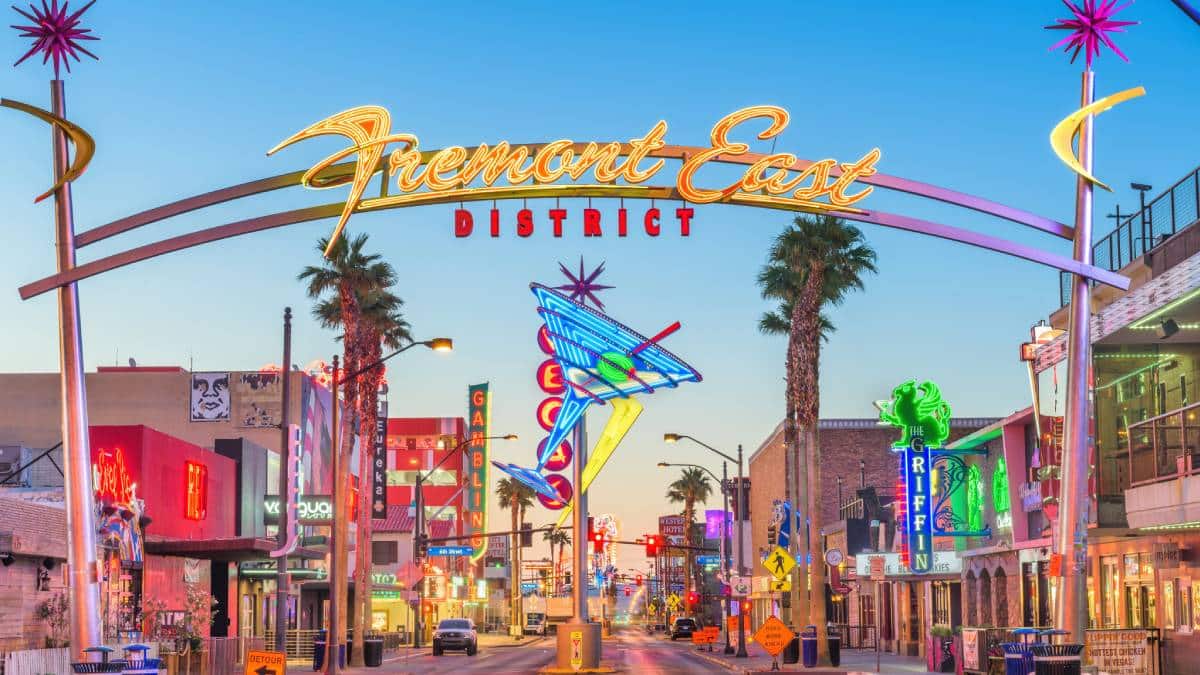
Las Vegas Tourism Decline Minimally Affects Revenue
In 2025, the Las Vegas Strip reported $8.82 billion in GGR. Although this was a slight increase from 2024, it was essentially flat and fell short of its 2023 peak of $8.9 billion.
The Strip, making up around 56% of Nevada’s total gaming income, faced a challenging December with a 6.1% year-over-year revenue decline, attributed partly to a drop in high-roller baccarat players.
On the other hand, the downtown area performed exceptionally well, setting a new record with $951.2 million in GGR—a 2.1% rise from 2024. Downtown’s appeal can be linked to its affordability and its draw for visitors who prioritize value, highlighting a growing trend away from the high-priced allure of the Strip.

Challenges: Tourism Decline and Pricing Fatigue
Operators in Las Vegas witnessed their first tourism decline since the post-COVID recovery began. They’re still unsure as to when it might end.
The Las Vegas Convention and Visitors Authority cited economic factors as the primary reasons, including inflation and increased costs for travel, lodging, and entertainment.
Visitors experienced “pricing fatigue,” where elevated prices discouraged many, especially mid-tier gamblers. Despite fewer visitors, those who did visit spent more, suggesting a shift towards higher-value patrons or attracting larger events such as major conventions or NFL games at Allegiant Stadium.
Broader Context and Future Outlook
After a dynamic post-COVID revival, the gaming industry in Nevada has transitioned to more stable growth, moving from previous double-digit hikes to a modest 1.2% increase. While December saw a slight 1.6% dip year-over-year, the monthly GGR exceeded $1 billion for the 58th month in a row.
Looking forward, analysts predict a positive outlook for early 2026.
Factors like favorable calendar effects and potential growth projections of 1% to 1.4% are expected to contribute to the rebound. Additionally, industry giants such as MGM Resorts and Caesars Entertainment are diversifying their offerings, emphasizing non-gaming amenities like dining and entertainment to reduce their dependence on gambling revenue.
All in all, Nevada’s gaming revenue in 2025 reflects both the successes and challenges facing the industry today.
While record-breaking figures demonstrate The Silver State’s ability to navigate the Las Vegas visitor decline and pricing challenges to maintain its upward trajectory. This will be critical to sustaining growth in Nevada’s gaming scene.
- SCCG Management. The Gambling Industry’s Global Connector. Access Here.
- Source: https://sportshandle.com/how-the-las-vegas-tourism-decline-affected-gaming-revenue/