
By Ihsan.
Card players know the feeling – a fleeting glimpse of a card, a fast calculation, a choice made in seconds. They also know that success often leans more on memory than on chance. Few, however, realize that Mahjong demands the same mental sharpness, tracking every discarded tile and recalling every move with precision.
Those who’re ready to start training can do it here – practice Mahjong online and train under real pressure. Those who’re still not convinced should pay close attention to the lines that follow.
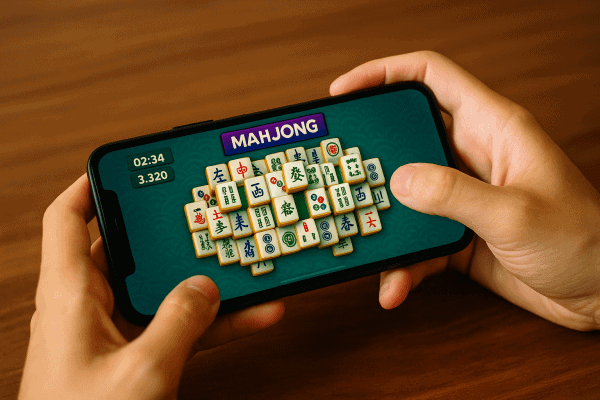
The Mental Challenge of Mahjong: A Workout for Memory
Mahjong may appear deceptively simple: a table of patterned tiles shuffled and stacked. Yet beneath this surface lies a game of intense concentration and memory work. Players must manage several demanding mental tasks at once:
- Tracking every discarded tile to know what combinations are no longer possible
- Recalling which tiles remain unseen to anticipate potential moves
- Monitoring opponents’ discards to infer their hand strategies
- Adjusting personal strategy in real-time based on shifting patterns
This constant mental juggling is a powerful memory workout.
Scientific evidence supports this statement. A 2024 study on associations between Mahjong and cognitive functioning found that older adults who regularly played Mahjong showed better cognitive performance than non-players, particularly in attention, calculation, and recall. The study suggested that Mahjong’s combination of memory tracking, pattern recognition, and decision-making may contribute to maintaining cognitive function over time.
For card players, this ability to hold shifting information under pressure offers a striking advantage. It mirrors the skills needed at the Blackjack table, where memory, focus, and anticipation can mean the difference between winning and folding.
Shared Skills: Why Mahjong Players Make Better Card Players
Mastering Mahjong builds habits that card players, especially those who play Blackjack, find immediately valuable. This is because, at its core, Mahjong sharpens visual scanning and fast data recall. Players track a constantly changing display of tiles, forcing the brain to catalogue and retrieve visual information within seconds.
This same skill translates directly to Blackjack, where the player must recognize card values instantly and remember which have already appeared. Quick pattern recognition becomes second nature. Players who have trained on Mahjong boards often notice an increased ability to follow card sequences and anticipate upcoming combinations.
Another advantage comes from Mahjong’s rhythm of continuous observation and action. There are no long pauses; attention must remain fixed. Blackjack rewards that same vigilance. The difference between a casual player and a strategic one often lies in who can hold the most accurate mental snapshot of the game as it unfolds.
For this reason, for many, Mahjong is more than recreation – it becomes preparation. The mental reflexes it develops provide an unmistakable edge once the cards are in play.
The Evidence: Research Linking Game Play and Memory Enhancement
The cognitive benefits of Mahjong are more than anecdotal; they are supported by empirical research. A 2020 study on executive functions of elderly people published in Frontiers in Neurology examined the effects of regular Mahjong play on the elderly with mild cognitive impairment. Participants who engaged in Mahjong sessions three times a week for 12 weeks demonstrated significant improvements in executive function compared to a control group that did not participate in the game. These enhancements were measured using standardized cognitive assessments, indicating that consistent engagement with Mahjong can bolster mental agility and decision-making skills.
These findings align with the idea that engaging in mentally stimulating activities like Mahjong can help maintain and even improve cognitive abilities. For card players, this evidence underscores the value of incorporating such games into their routines to enhance memory and decision-making skills.
Five Ways Mahjong Strengthens Skills Card Players Need
The advantage Mahjong offers card players goes beyond general memory improvement. It develops specific mental habits that can be directly applied to card games, helping players sharpen their tactical edge.
- Scanning Without Hesitation – In Mahjong, players learn to process large amounts of visual information quickly. Card players benefit by recognizing dealt cards faster and reacting without second-guessing.
- Tracking Sequences Instinctively – Remembering discarded tiles trains the brain to track unfolding card sequences naturally, a key skill in Blackjack and Poker strategy.
- Staying Mentally Organized Under Pressure – Mahjong players juggle multiple possibilities in real time, a mental discipline crucial during complex hands or rapid betting rounds.
- Reading Shifts Before They Happen – Recognizing emerging patterns teaches card players to anticipate shifts in opponents’ strategies before they fully unfold.
- Maintaining Focus Over Long Games – Just as Mahjong demands full attention across extended sessions, card players build the stamina needed for tournaments and multi-hand play.
Each of these habits strengthens cognitive sharpness where it matters most – at the table, when every memory and decision counts.
How to Incorporate Mahjong Into Card Game Practice
If Mahjong sharpens the skills card players rely on, the next question becomes: how best to use it as a training tool? The answer lies in structured, consistent practice.
Card players who approach Mahjong with the same focus they bring to card strategy see the greatest benefits. Adding one or two Mahjong sessions into their weekly routine, whether live or digital, creates a controlled environment to strengthen tracking, sequencing, and fast decision-making. Online platforms are particularly useful for drilling these skills under timed conditions, mirroring the pressure of tournament play.
The real advantage comes when players treat Mahjong not as a casual diversion but as deliberate mental conditioning. Playing against skilled opponents, adjusting strategies on the fly, and staying focused through long sessions mimics the demands of serious card competition.
As players progress, they often report a subtle but real shift: patterns stand out faster, memory becomes more reliable, and decision fatigue sets in later. For card players seeking that edge, Mahjong becomes not a distraction, but a disciplined part of their preparation.
Beyond the Table: The Cognitive Legacy of Mahjong for Players
The skills sharpened at a Mahjong table do not stay confined to the game. Players often notice improvements in areas of life that require the same focus, memory, and strategic thinking. These subtle changes manifest in faster decision-making, better multitasking, and greater mental stamina in demanding work or study environments.
Mahjong strengthens working memory – the brain’s ability to hold and manipulate information over short periods. In today’s world of constant task-switching and information overload, this becomes invaluable. Regular players report feeling better equipped to:
- Manage complex schedules without losing track of priorities
- Solve daily problems under pressure with greater confidence
- Maintain focus amid distractions and shifting demands
This form of cognitive cross-training gives Mahjong players a unique advantage. Just as athletes use varied routines to build overall fitness, the mental agility developed through Mahjong enhances adaptability and performance in unpredictable real-world situations.
In an era where attention is one of the most sought-after commodities, the quiet discipline of Mahjong stands out. It reminds us that sometimes, true focus and sharp thinking are not found in fast-paced chaos, but in the patient strategy of a timeless game.
IMAGE CREDIT: mahjong365.com
- SCCG Management. The Gambling Industry’s Global Connector. Access Here.
- Source: https://www.blackjackreview.com/wp/2025/05/15/how-mahjong-enhances-recall-skills-for-card-players/