
Article By Stephen Crystal – Founder & CEO, SCCG – SCHEDULE A MEETING
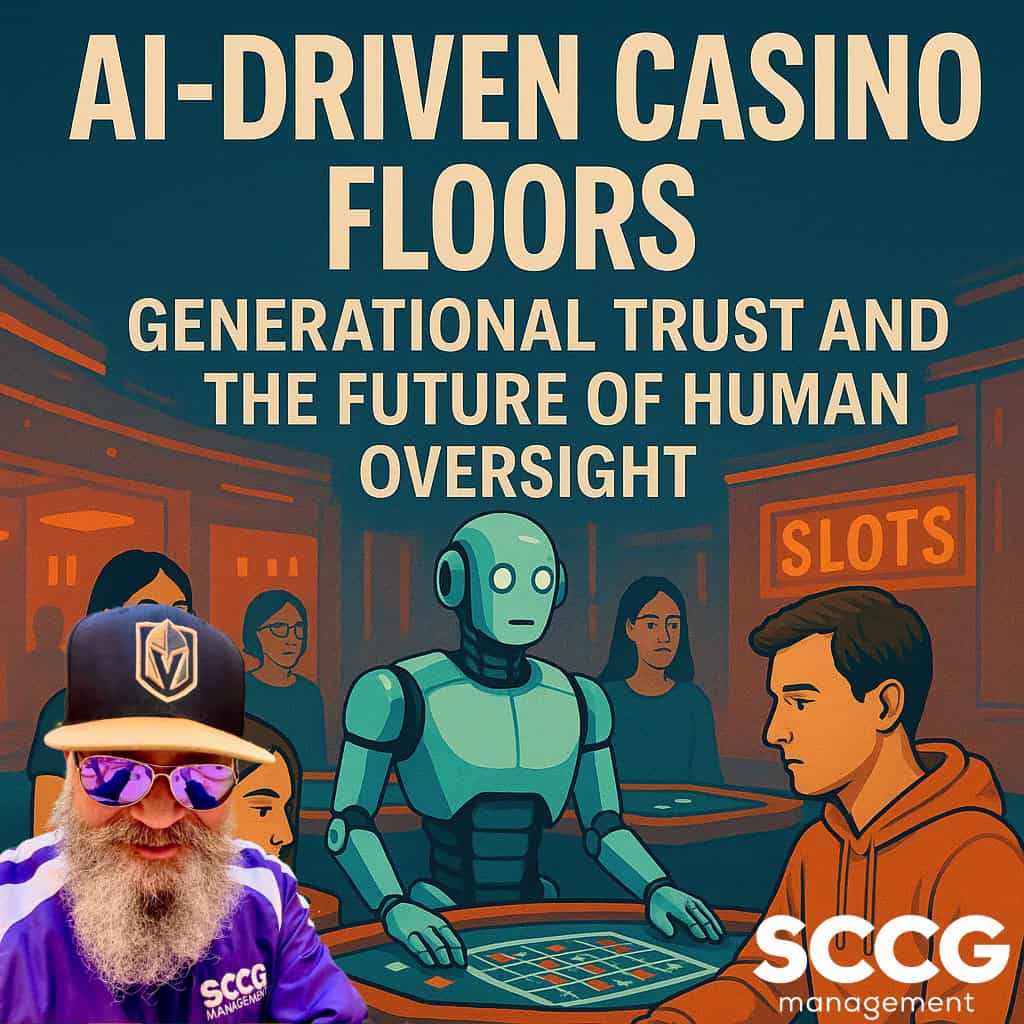
Artificial intelligence is reshaping casino operations, moving beyond back-end analytics to the front lines of player interaction and floor management. From AI-powered live dealers to automated oversight systems, the casino floor is undergoing a transformation that raises critical questions about trust and acceptance across generations.
Will Gen Z embrace robot dealers as a seamless part of their gaming experience? Can older generations, accustomed to human pit bosses, adapt to AI-driven oversight?
The Rise of AI on the Casino Floor
Operational AI is no longer confined to data crunching—it’s now a visible presence in casinos. AI-powered live dealers, powered by advanced natural language processing and real-time behavioral analysis, can host games like blackjack or poker with human-like interactions, adapting to player preferences instantly.
Meanwhile, AI-driven oversight systems monitor floor activity, detect fraud, and optimize table assignments in real time, reducing the need for traditional pit bosses. These innovations promise efficiency and scalability. AI dealers can operate 24/7 without fatigue, delivering consistent experiences.
Automated oversight systems analyze vast datasets—player behavior, game outcomes, and staff performance—faster than any human could, identifying patterns that enhance security and profitability. Yet, their success hinges on player and staff acceptance, which varies sharply by generation.
Gen Z: Ready for the Robot Dealer?
Gen Z, born into a world of digital interfaces and virtual assistants, is primed to embrace AI dealers. For them, technology is not a novelty but an expectation. AI-powered dealers can offer personalized banter, tailored game recommendations, and seamless integration with mobile apps—features that align with Gen Z’s preference for immersive, tech-driven experiences.
Early data from iGaming platforms shows younger players engage longer with AI-hosted games, drawn to their consistency and lack of human error. However, trust remains a hurdle. While Gen Z is comfortable with technology, they are skeptical of corporate motives. AI dealers must be transparent—players need to know how randomness is ensured and how their data is used.
Without clear communication, players may hesitate, suspecting algorithms favor the house. Operators can address this by embedding Trusted AI principles—transparency, fairness, and explainability—into AI dealer systems, ensuring Gen Z sees them as reliable partners in play.
Older Generations: Resisting the AI Pit Boss?
For Baby Boomers and Gen X, the human pit boss embodies authority, expertise, and the social fabric of the casino. Replacing them with AI systems that monitor tables, flag suspicious behavior, and optimize staffing can feel like a loss of tradition.
These generations value the human touch—dealers who remember their names, pit bosses who share a nod of recognition. AI oversight, while efficient, risks alienating players who see it as cold or intrusive.
Resistance isn’t just emotional. Older players often trust human judgment over algorithms, fearing AI might misinterpret data or prioritize profits over fairness. For example, an AI system flagging a player for “suspicious” behavior based on betting patterns might feel like overreach without human context.
To counter this, operators must blend AI with human oversight, using hybrid systems where AI escalates issues to human managers for final decisions. This approach preserves the personal connection while leveraging AI’s speed and precision.
Attitudes and Preferences
To better understand the generational divide in attitudes toward AI on the casino floor, this table highlights how operators must tailor implementations to address specific concerns, ensuring broader adoption.
| Generation | Key Characteristics | Attitude Toward AI Dealers | Attitude Toward AI Oversight | Preferred Features |
| Gen Z (1997-2012) | Tech-native, values innovation & personalization | Generally positive; see as fun and efficient | Cautious but accepting if transparent | Immersive tech integration, personalized interactions, mobile compatibility |
| Millennials (1981-1996) | Balanced tech adopters, seek experiences | Mixed; appreciate convenience but want authenticity | Skeptical of full automation; prefer hybrid | Social elements, loyalty rewards, seamless omnichannel play |
| Gen X (1965-1980) | Pragmatic, value reliability | Hesitant; prefer human dealers for trust | Resistant; fear loss of jobs and personal touch | Familiar interfaces, human escalation options, clear explanations |
| Baby Boomers (1946-1964) | Tradition-oriented, social gamers | Negative; miss human interaction | Strongly opposed; view as intrusive | Social atmosphere, recognizable staff, minimal tech disruption |
Bridging the Generational Divide
To integrate AI successfully, casinos must address the trust gap across generations with practical strategies such as:
- Transparency in AI Systems: Clearly communicate how AI dealers ensure fair play (certified random number generators) and how oversight systems protect players (fraud detection). Player-facing dashboards showing real-time AI decisions can build confidence.
- Hybrid Models for Oversight: Use AI to handle routine tasks like table monitoring and staff scheduling, but retain human pit bosses for high-stakes decisions and player interactions.
- Personalization for Engagement: Tailor AI dealer interactions to match generational preferences—fast-paced banter for Gen Z & familiar tones for older players. Machine learning can analyze player demographics to adjust in real time.
- Education and Familiarization: Offer demos or tutorials for AI-driven games, especially in physical casinos, to ease older players into the technology. Gen Z can be engaged through gamified apps that showcase AI’s capabilities.
AI Implementation Examples Across Casino Operations
Here are examples of how AI is already being applied on casino floors, with a focus on generational appeal:
| AI Application | Description | Benefits for Younger Generations | Benefits for Older Generations | Potential Challenges |
| AI-Powered Dealers | Virtual hosts for table games using NLP for interaction | Fast, customizable experiences; no wait times | Consistent rules enforcement | Building emotional rapport |
| Automated Oversight | Real-time monitoring of floor activity and fraud detection | Seamless security without disruption | Quick resolution of issues | Perceived as surveillance |
| Dynamic Table Optimization | AI assigns tables based on player flow and preferences | Personalized game matching | Reduced crowding | Loss of spontaneous social mixing |
| Hybrid Human-AI Teams | AI assists pit bosses with data insights | Enhanced gameplay recommendations | Retained human authority | Training staff on AI tools |
The Future of the Casino Floor
The shift to AI-driven casino floors is inevitable, but its success depends on balancing innovation with trust. For Gen Z, AI dealers are a natural extension of their digital world, but they demand transparency to trust the system.
For older generations, AI oversight must complement, not replace, human expertise to maintain the casino’s social allure. Operators who integrate these systems thoughtfully—embedding governance, transparency, and personalization—can create a floor that appeals to all players while optimizing operations.
SCCG’s experience across tribal properties, iGaming, and hospitality shows that the gap between technology and trust is the next frontier. By deploying AI that respects generational differences, casinos can transform their floors into dynamic, inclusive spaces that drive engagement and loyalty.
The question isn’t whether AI will take over the casino floor—it’s whether operators can use it to enhance the human experience, not replace it.